Watch this and remain unmoved
June 12, 2017
This is a dip into where I’m going with the next mix. This particular avenue of Cajun music used to rub me the wrong way because it is so unrelentingly happy and boisterous. Now I’m older and jaded and could use a loosey-goosey fiddle jam to knock all my chakras back into place. At this day and age of life, there’s something kind of absolutely magical about changing your mind about an entire genre of music and getting down to the dirty work of sorting it all out in your mind. That’s where I’m at. This is why I’m posting youtube clips of Aldus Clark reaffirming my faith in the power of surprise.
Magicistragic Redux
June 11, 2017
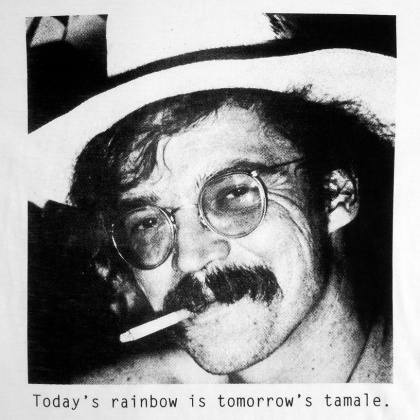
Just like your favorite hoagie joint or a frosted mug filled to its brim with a salty-ass beer, there are some things in the universe that one cannot quit. I guess that the desire to get half-crocked and write about music qualifies as one of those things you just can’t quit. I’m planning on sticking to mixes and vinyl rips of albums that aren’t readily available online. I was going to start anew, but figured this rigamarole has been around for nine years, so let’s just keep shouting into the aether just a little bit more.
Anyhow, there’s a bit of a blasé backstory to my first contribution here in a long while. It’s not anything fancy or some bougie couture collection of forgotten favorites, but a little token of gratitude to a few co-workers at my place of employment before a well-deserved summer recess. One likes to serenade students with James Taylor covers during the humdrum moments when the school year has wound down to its rudderless end. To the best of my limited knowledge, he’s a big fan of Loggins and Messina, America, Bread and the Pure Prairie League. The other fellow doesn’t share much either, but I have caught him jamming out to Dick’s Picks during his prep period. Plus, the dude wears a Flying Burrito Brothers T-shirt on the last day of school every year. I wanted to find a middle ground between these two seemingly similar palates and capture that bittersweet moment when you reminisce about the highs and lows of the past year and wonder what is to come in the next one.
I guess I should establish the intended vibe. It’s a collection of every song I’d reach for if you asked me to summarize all I love about the understated, sometimes existential worries of the 70s folk/country scene and the rest just tries to garner just enough mellow chortling to keep things upbeat. Let’s hearken back to the heyday of J. Peterman and call it what I foolishly imagine it to be–A heady stroll through the “hits” of the 70s, except for the all the ones that aren’t, that’ll keep your head nodding while you wipe a few tears away during the cowboy songs about men who can’t quite measure up to what they could have been.
http://www32.zippyshare.com/v/MoHalfge/file.html
Grateful Dead-Bertha(Live 8-27-72)
Rosali-Blind Bird
Willis Alan Ramsay-Painted Lady
Ryley Walker-The Roundabout
John and Beverly Martin-John the Baptist
Bert Jansch-Open up the Watergate(Let the Sunshine In)
Ian Matthews-Shady Lies
Terry Allen-Cortez Sail
Richard and Linda Thompson-The Calvary Cross
Guy Clark-L.A. Freeway
Blaze Foley-Clay Pigeons
Jimmy Carter and Dallas County Green-Travelin’
Bill Wilson-Resolution
Willie Dunn-I Pity the Country
New Riders of the Purple Sage-I Don’t Know You
Michael Hurley-Blue Navigator

http://www76.zippyshare.com/v/aeotfiSD/file.html
Just in case you were curious about today’s vibe.
Cate Le Bon-What’s Not MineAmen Dunes-Ethic Song
Lavender Flu-Those That Bend
Sarah Mary Chadwick-Aquarius Gemini
Boomgates-Whispering or Singing
1910 Fruitgum Company-1,2,3 Red Light
Velvet Underground-What Goes On(Version Two from the Matrix Tapes)
Spacin-Titchy
Family Portrait-Other Side
The Stevens-Teenage Satellites
Krano-Tosca
Arp-Judy Nylon
Who’s Who-Hypnodance
The Baird Sisters-On and On
Stalk-Forrest Group-What is Quicksand?
Dick Diver-Waste the Alphabet
Broken Water-Say What’s on Your Mind
Reverend Charlie Jackson-God’s Got It
Universal Togetherness Band-Ain’t Gonna Cry
Sad Lovers and Giants 50:50
It’s been awhile. Things are busy. Mixes are overdue.
March 1, 2015

Well, life is busy in the best way possible and posting on this joint is a mere afterthought these days. However, I have been making a series of mixes for assorted folks and my own personal commute over the past couple years. An old friend, Robert Craig of Savannah, Ga, recently informed me that he had been listening to old mixes from the blog. I got to thinking that others might dig a few more I’ve made recently. Here they are.
http://www77.zippyshare.com/v/pXv2yrjI/file.html
Mix Number One
Jessica Pratt-Back, Baby
Willie Dunn-I Pity the Country
King Gizzard and the Electric Wizard-30 Past 7
Amen Dunes-Lonely Richard
Comet Gain-You Can Hide Your Love Forever
The Courtneys-90210
Spiritualized-Run
The Clientele-We Could Walk Together
Women-China Steps
Bright-I’m Colliding
Father’s Children-Inshallah
Leo Kottke-Watermelon
Lida Husik-California, Oregon
Normal Greenbaum-Campin’
Thinking Fellers Union Local 282-Hundreds of Years
Norman Jones-I LOve You
JJ Cale-I’ll Be There
S.E. Rogers-Love is Love
The Swirlies-No Identifier
Jeffrey Ziegler-Used to be Mine
Kendra Smith and the Guild of Temporal Adventurers-Wheel of the Law

This one is from last Christmas. It is as satisfying as the moment when the tarantula gets unleashed in Home Alone.
http://www33.zippyshare.com/v/cMs2YbiY/file.html
Ian Matthews-Keep on Sailin
Steve Harley and Cockney Rebel-Make Me Smile
Robert Carpenter-Miracle Man
Zola Jesus-Poor Animal
Ultimate Painting-Ultimate Painting
Steve Gunn-Way Out Weather
World Party-Is it Like Today
The Horrors-So Now You Know
Yumi Houma-The Brae
Parquet Quartz-Uncast Shadow of the Southern Myth
Strapping Fieldhands-Arrogant Flower
Ozark Mountain Daredevils-Colorado Song
Toni Brown-Good For You Too
Papercuts-John Brown
Bert Jansch-Lost and Gone
Teegarden and Van Winkle-Today I Left For the Big Ciy
David Kilgour-You Forget
Burnt Vinyls
November 23, 2014
Yeah, it’s been a long time. However, a second child takes precedence over this digital backwater posing as a blog. It might be another year or just a few days until I post again, but I’ve been transferring some of my records to mp3s lately and it seemed only fitting that I stumble back onto here for a spell. Anyhow, here is a smattering of songs that have enflamed my very soul to press record and stare at the computer screen until the tune is over.

New York Endless
Strategies EP
“Scale Those Heights”
http://www36.zippyshare.com/v/zhMv73G3/file.html
This song dabbles in so many things I enjoy so very much. It’s a melange of melodic IDM of the Warp and Kompakt persuasions, Kraftwerk, Giorgio Moroder and a sprinkling of early New Order at the very end that floors me. This particular song just gobbles up the best electronic music of the 70s, 80s and 90s and regurgitates something stunning.

Ozark Mountain Daredevils
s/t
“Colorado Song”
http://www42.zippyshare.com/v/25309340/file.html
Starts off with some earnest sensitive 70s balladry of the most primo stock, but slowly picks up steam as they start delving into some fable about a man who rediscovers his mojo when he drops everything to dwell on the mountains of Colorado. Shit gets real when they start multi-tracking harmonies and a hellacious slow burner of a guitar solo steps into the spotlight. Hell, it’s even got an interlude of twinkling bells to class things up a bit before a climactic coda takes us home.

Chris Smither
Don’t It Drag On
“Lonesome Georgia Brown”
http://www36.zippyshare.com/v/PfagEZ2e/file.html
No one ever gives this dude his due. His first two albums are essential, but Don’t Drag It On is the better of the two because it somehow weaves a scenario where a cover of “Friend of the Devil” bookends a slow-motion take on the Rolling Stones “No Expectations” and it seems like the best idea since sliced bread. However, “Lonesome Georgia Brown” takes the cake since it kind of evokes the vibe of Terry Allen’s Juarez as Smither creates an entire fictional universe in song. It’s one song, but it traces Georgia Brown’s slow descent into hopelessness and you find yourself pulling for the underdogs in life.

Kenny Rankin
Sliver Morning
“Killed a Cat”
http://www54.zippyshare.com/v/44547150/file.html
Most of his music borders on total 70s folksy cheese, but this particular album elevates itself to cave-aged status in comparison to his others. “Killed a Cat” rules because it is such a nihilistic stab surrounded by lush fluff. The whole album is on some 70s Alan Alda trail of sensitivity and then Kenny Rankin decides to get real on us. “Killed a Cat” taps into some damaged Tim Buckley vein and Rankin starts proselytizing about the hopelessness of life in 70s New York City where faceless hooligans kill stray cats and the citizenry die a slow death of a thousand cuts as our protagonist reminisces about a time when he romanticized a city which now seems humdrum and doomed.
Eight albums that will make your world a better place
June 29, 2013

I’m in the process of selling my home and buying another to accommodate my lovely wife, spirited son and new daughter arriving in the month of November. Add potty training to this domestic tempest in a teapot and life becomes a very busy and rewarding place. Therefore, it’s been imperative to take time to unwind with an album after the ruckus dies down and the couch comes a-callin’. Nothing is accompanied by a musical link, but life is at its best when you have to work just a little harder to find that peaceful place where all is right with the world.
Yves Serge and Victor-Cabigi (Self-released 1975/re-released by Guerssen)
This one fulfills a lifelong mission to find three French dudes in 1975 that were dedicated to finding the creamy center of a confection inspired by Neil Young circa After the Gold Rush, New Riders of the Purple Sage, CSNY and the Laurel Canyon. Cabigi removes all of the epic sweep of its progenitors and twists it into to something intimate, homespun and utterly inviting to anyone with a lick of good taste.
The Go-Betweens-Before Hollywood (Rough Trade 1983)
I’ve been listening to this one lately for entirely different reasons than Cagibi. This is a highly wired and wary collection of songs. Moody might be the best descriptor, but plenty apply. Every song is a meditation on the same theme of goodbyes and tracing the steps that led to that tragic moment when things change. They all capture the bittersweet nature of change and revels in the peaks and valleys that ensue in its aftermath.
Jay Bolotin-s/t (Commonwealth United 1970/reissued by Locust a few years ago)
It’s like Leonard Cohen minus the immense weightiness mixed with a dash of Fred Neal and Donovan. A classic slow-burner of an album. Nothing is particularly catchy, but it’s entirely engrossing. It’s the kind of album where one of the best songs is about being one with the wind on a summer’s day and casting your lot with a rainbow princess full of promises. It’s a totally ridiculous concept, but he sells it so well that I want to join him in his quest.
JD Emmanuel-Wizards (North Star Productions 1982/reissued by Important a few years ago)
I haven’t attended a yoga class in three years, but I would sign up again in an instant if they promised to play this album on incessant repeat. No matter how hectic your day has been, Wizards will rearrange your chakras and encourage you to do reiki whenever your spirit feels defeated. It’s sublime and the most chill thing that may ever come into your life.
Scott Dunbar-From Lake Mary (Ahura Mazda 1970/reissured by Fat Possum a few years ago)
I love the blues, but rarely make it through an entire album. If I’m in that particular mood, I’ll jump from record to record, but From Lake Mary gets played from beginning to end every single time. I couldn’t recollect a single lyric from this one after dozens of listens, but it doesn’t matter because it’s the naggingly simple, yet hypnotic percussion and lazy strum of the guitar that steals the show. All stress floats off of your skin once you invite it over for the night.
Duke Ellington/Charles Mingus/Max Roach-Money Jungle (Blue Note 1963)
For some reason, I associate promising beginnings with this record. One of the most positive and vibrant jazz albums recorded. All three musicians simultaneously solo in a way that sings more richly than vocal chords could ever duplicate. It’s scattershot. It’s endlessly busy. It echoes the hustle and bustle of my days and perfectly captures the joy I feel every step of the way.
The Bridge: A Tribute to Neil Young (Caroline 1989)
Tribute albums usually suck. This is one of the few that doesn’t. This is the only place where Soul Asylum, Dinosaur Jr. Nikki Sudden, Loop. Nick Cave and Psychic TV congregate and it somehow makes perfect sense. It’s all over the place stylistically, but isn’t that one of the reasons Neil Young inspires such devotion? Plus, it somehow features a cover of “Barstool Blues” by Soul Asylum that made me double check to see if I was missing something since it’s so perfect. Nick Cave’s “Helpless” might be one of the best things he recorded and Psychic TV’s cover of “Only Love WIll Break Your Heart” makes me wish they devoted an entire album to the vibe created here.
Stonewall-s/t (Tiger Lily 1976)
Hard rock has been rendered impotent from overuse, but it is probably the perfect adjective to describe this album. It has two basic components: lonely wailing and riffs worthy of adulation. Just give into the idea of an alternate universe where these guys were famous and you can almost feel yourself lifting your lighter in the air.
Oneida-Anthem of the Moon
June 11, 2013

Oneida
Anthem of the Moon (Jagjaguwar 2001)
http://www6.zippyshare.com/v/38140882/file.html
I once read that Anthem of the Moon was based on a dream one band member had where they discovered an alternate version of the Grateful Dead’s Anthem of the Sun. They even went so far as to remember each song on this imaginary album and appropriate them for their fourth and possibly best album. Although it would have been endlessly cool if did, not a single moment on Anthem of the Moon resembles a single lick of Anthem of the Sun. However, they are kind of kindred spirits in that they both try to establish their own peculiar wrinkle or twist on psychedelic rock and roll. Where the Grateful Dead tried o approximate the sounds of endlessly shifting rorschach blots, Oneida approximate the throbbing and pulsating thrills of some day-glo light show. One aimed to be amorphous, the other is precisely repetitive and structured. You’d never confuse them as kissing cosigns, but the connection makes sense if you listen to both albums as much as I do.
Anthem of the Moon is yet another album that kind of got relegated to the backburner because there were a lot of crappy flavors of rock and roll in favor and this was just the long-haired weirdo marring a landscape where electroclash was somehow in vogue. At the time, they were unstoppable live and I wish I could transport you to their shows during this timeframe because it really frazzled my mind because it was so expansive and aggressive that I truly lost myself in whatever they played. The recorded version is no slouch either and alternates between tightly wound groovers and weirdo tunes that kind of rely on organs, reverb, echo and ethereal choruses.
This album is all over the damn place. You get songs like “To Seed and Flower” which kind of starts off like some unforseen mid-ground between Bastro and Tortoise that suddenly shift into some bizarro world version of a pop-punk song. “All-Arounder” is another tale of three songs going on at once as the instrumentation layers some synth melody from a Silver Apples song over some incessantly dissonant riffing while Kid Milions sings “I can see the feeling/creeping ‘cross the ceiling all around her/All Around Her/I can See the Dayglo/Wrapping in a Halo/all Around Her.” The end result is a rare example of when you try everything at once and it somehow works. “Almagest” occupies some vague space where Wicker Man vibes can co-exist with some mid-70s Cluster record playing as the soundtrack. Anthem of the Moon borrows from the best and spits out something entirely their own. It isn’t a perfect album by any means, but it does conjure its own little world populated by song.
Magicistragic is Five Years Old and Contented Mix
June 4, 2013

Somehow I’ve made it five years without giving up on this ramshackle miss-mosh of reviews. I came close to scrubbing this site clean on numerous occasions, but something keeps me doing this now and again. Much love and appreciation to all the folks who visited us and even sent along some kind words. Anyhow, let’s not gush. Here is our latest in a long line of monthly mixes.
Magicistragic Mix for June
http://www4.zippyshare.com/v/66921494/file.html
Joao Gilberto-Aguas De Marco
Swamp Dogg-Do You Believe
Electric Wizard-Vinum Sabbathi
Charlambides-Those Who Walk
Adolescents-Kids of the Black Hole
Endless Boogie-Taking out the Trash
The Breeders-Safari
My Bloody Valentine-(When You Wake) You’re Still in a Dream(Peel Session 1998)
Phil Yost-Bent City I
Beaches-Dune
Wire-The 15th
Eddy Current Suppression Ring-Wrapped Up
The Woolen Men-Her Careers
John Maus-Hey Moon
Lyme and Cybelle-Follow Me
Royal Trux-Back to School
Morly Grey-After Me Again
Killing Joke-Eighties
Glass Candy-Beautiful Object
The Dovers-What Am I Going to Do?
Dead Meadow-s/t
May 17, 2013
 Dead Meadow
s/t (Tolotta 2000)
http://www72.zippyshare.com/v/65741584/file.html
In theory, I should probably love everything Dead Meadow ever recorded. They alternate between chugging anthems that crib all the right notes from the best hard rock albums of the 70s and elongated ballads that borrow from the right loners of the 60s. However, the obstacles to a deep appreciation of what they play is the fact that it sometimes feels a bit too much like an homage instead of original and forceful statement of purpose. That’s just a mere quibble since most of my favorites of the past few decades have been caught with their hands in the cookie jar more than once. All of their albums are guilty of this vice, but their debut captures them at an embryonic moment when all the edges were still jagged and the connections between influences not quite so obvious. They’re still feeling their way towards an identity and it kind of captures them at a place where there was a wide-eyed sense of wonder and they kind of let it all hang out. I also have fond memories of this album because it really stuck out like a sore thumb in the rock and roll landscape as the band didn’t really have a niche as the deservedly short-lived era of stoner rock was petering out and indie-rock was kind of in a woeful state in the year 2000. They were kind of a square peg that kind of sounded like an emasculated Black Sabbath with a fondness for the sounds of Nuggets and Spacemen 3. That was enough for me then and it still is thirteen years later.
This all sounds like half-hearted praise, but I really do dig Dead Meadow and their later albums have grown on me in recent years even though I still haven’t quite reconciled myself with the nasal whine of Jason Simon who is the nephew of David Simon, the brilliant mind behind The Wire and Treme. Yes, it’s pointless trivia, but I always thought it was a neat little factoid. His voice doesn’t ruin the whole enchilada like that John Garcia’s repellent snarl in Kyuss, but it sometimes mars the impact of his guitar playing which often matches the bruising, rugged heights of the idols they so eagerly ape. The opener “Sleepy Silver Door” is a perfect example of this conundrum as the band offers a perfect introduction to their bread and butter. Simon’s riff overtakes the song and kind of falls somewhere between a clumsy, yet forceful combo of Tommy Iommi of Black Sabbath and Tony McPhee of the Groundhogs. It’s that good, but could be so great if the vocals matched the majesty of what his fingers hath wrought. It’s a bit of hyperbole, but it comes within spitting distance of it.
“Dragonfly” is another perfect slice of why Dead Meadow is capable of raising the bar beyond talented tribute as they carve out some unforseen landscape that taps into taps into the same well water the Verve were drinking on A Storm in Heaven. Like that classic album, it’s arena rock re-imagined for the small stage as they pen an anthem that kind of spills over the edge to the point that it kind of feels like it lasts forever. It’s kind of epic even though it only lasts four minutes. It kind of reminds me of the masculine counterpoint to Bardo Pond’s “Be a Fish” off of their Amanita album. Yes, it’s an overly esoteric reference, but listen to the two songs back to back and see if you jive with what I’m selling.
What makes Dead Meadow’s debut stand as their finest moment is that they kind of tried to encapsulate all that they loved into one single album and the end result is a flawed, but enigmatic mess that somehow captures the essence of all I love about the early 90s and mid 70s in a variety of styles: pseudo-shoegaze meltdowns, bluesy posturing and thudding riffs that I can hang my hat upon in times of jubilation. It ain’t perfect, but it beats the pants off of the majority of rock albums of the 2000s.
Magicistragic Mix for May
May 9, 2013

Magicistragic mix for May
http://www38.zippyshare.com/v/10611380/file.html
Sometimes life grows hectic and puttering around on the internet loses its luster for a bit. This is one of those times. I fully expect to find more time to aimlessly ramble about albums in the near future. In the meantime, here is another mix that captures the vibe of my evening. On an unrelated note, this humble blog is slowly approaching its fifth anniversary this summer. Would anyone out there like to design a graphic to commemorate our humble beginnings when the day finally rears its meager head? If not, I guess I’ll just create a portrait of a bawling wizard myself.
Steely Dan-Babylon Sisters
Connections-Finally
Tortoise-Magnet Pulls Through
Pere Ubu-Non Alignment Pact
Tamaryn-The Waves
The Clean-Getting Older
Glenn Jones-Across the Tappan Zee
Jimi Tenor and Kabukabu-Africa Kingdom
Swirlies-Bell
Marcos Valle-Ele E Ela
Bob Seger-Evil Edna
Django Django-Hail Bop
Lilacs and Champagne-Sour/Sweet
His Majesty’s Coachmen-I Don’t Want to See You
Thee In-Set-They Say
Damien Jurado-Birdcage
Girls Names-Drawing Lines
The Chills-After They Told Me She Was Gone
Gene Clark-Jimmy Christ
Thee Oh Sees-Putrifiers II
Television Personalities-Anxiety Block
Captain Beefheart-Twist Ah Luck
 Magicistragic's Weblog